


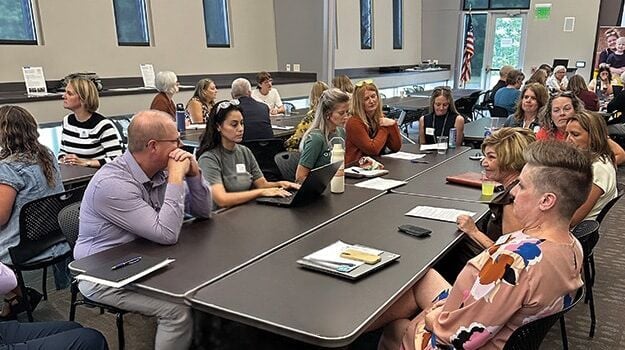

On August 27, United Way Quad Cities and OneTable QC brought together community leaders and human services organizations for a collaborative workshop. The workshop focused on identifying the challenges facing individuals and families across the Quad Cities, and exploring opportunities for public policy to help address them. Through cross-sector discussion, participants identified common barriers affecting health, education, financial security and nonprofit organizations, and outlined policy priorities that could strengthen systems, improve access to services and help create better outcomes for individuals and families throughout the community.
Cross-sector themes
- Workforce shortages drive poor outcomes and negatively impact access (for example, behavioral health providers, therapists, specialized educators, childcare support, human services professionals).
- Families struggle to access existing services – they cannot find, afford, qualify for or navigate systems effectively.
- Economic stability provides the foundation for improving health and educational outcomes – poverty sits at the root of nearly all the issues facing clients of human services organizations.
- Systems need simplification – fragmentation, administrative complexities, inconsistent definitions and burdensome reporting requirements add to nonprofit and client burdens.
People are also reading…
Recommended public policy priorities: Health
- Expand behavioral health workforce capacity – invest in tuition assistance, loan forgiveness, residency incentives and workforce recruitment programs.
- Improve access to affordable healthcare and Medicaid services – focus on Medicaid participation, reimbursement rates, provider acceptance and reducing barriers to care.
- Build a “basic needs first” strategy – advance policies that connect health outcomes to food security, housing stability, transportation and economic security.
Recommended public policy priorities: Education
- Increase access to early childhood and family mental health support for pre-K and elementary-aged children.
- Improve attendance through transportation and family support policies, including childcare, before-school care and support for students experiencing homelessness.
- Strengthen navigation and access systems for children with disabilities – reduce waiver waitlists, improve referral systems and expand support services for children and young adults with disabilities and special needs.
Recommended public policy priorities: Financial security
- Build career pathways through skills-based workforce development – expand trade education, certifications, apprenticeships, reentry pathways and dual-credit career opportunities.
- Advance housing affordability and housing rehabilitation – encourage reuse of abandoned properties, nonprofit housing models and stronger accountability for maintaining housing stock.
- Expand financial capabilities and asset building – financial literacy, culturally responsive financial education, homeownership preparation, banking access and long-term wealth building.
Recommended public policy priorities: Nonprofit administration
- Reform government contracting and reimbursement systems – simplify reporting, speed reimbursements, provide more consistent grant administration and ensure adequate indirect costs.
- Expand multiyear and capacity-building funding – support longer funding cycles and true capacity-building investment instead of annual reapplications.
- Strengthen nonprofit advocacy capacity – clarify nonprofit advocacy rules and create opportunities for nonprofits to participate in public policy discussions without fear.
This content is sourced from . It reflects the author's views and has not been edited by our newsroom. It may have been generated using AI assistance.


