


The student was ready to walk away.
A health issue had delayed her start to the semester. Now, she was questioning whether Health Information Management (HIM) was the right field for her and was not sure she could keep going.
She called Molly Adair, one of her instructors at Eastern Iowa Community Colleges (EICC).
For nearly two hours, Adair listened to the student's concerns and frustrations. She asked questions, including why the student had chosen the program in the first place, and gave her space to talk through what was happening.
The student did not walk away. Later, she told Adair she probably would have dropped the entire program without that phone call.
For Adair, the conversation reinforced how much can go unseen in an online classroom.
People are also reading…
"You never know where they're at when you're online. You don't talk to them every day. You don't see them," Adair said.
They have been in their students' shoes
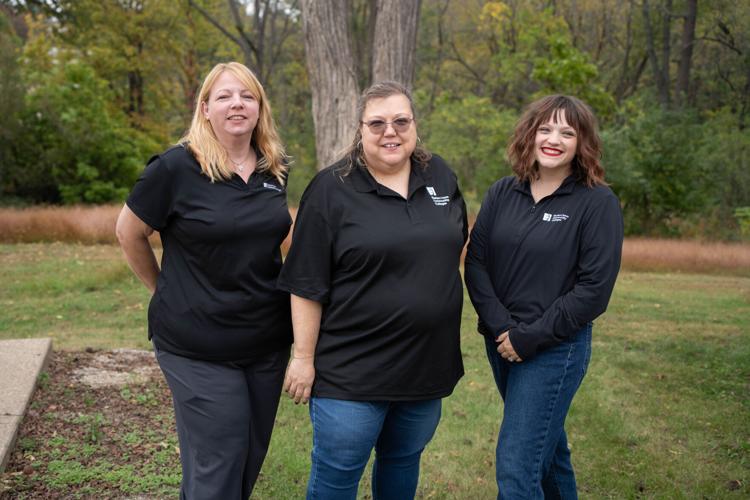
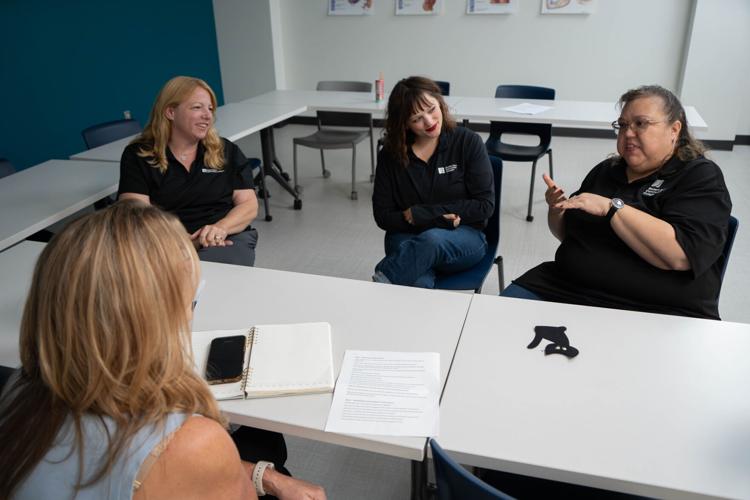
Adair, Rebecca Williamsen, and Amber Hotchkiss work together in EICC's fully online Health Information Management (HIM) and Cancer Information Management (CIM) programs.
All three know what it is like to be an EICC student. Adair and Williamsen graduated from the HIM program, built careers in healthcare, and returned to teach. Hotchkiss also completed EICC's CIM program.
Williamsen enrolled while raising a young child after a divorce. She initially considered radiologic technology, but needed a career path that fit her circumstances. A conversation with the HIM program director helped her see another option.
Adair also changed direction. After studying physical therapy assisting, she realized it was not the right fit. She discovered HIM, enrolled at EICC, and had to adjust to fully online classes. She even repeated a course before finding her footing.
Both remember instructors who listened, offered guidance, and helped them move forward.
They went on to work in HIM, with Williamsen advancing into leadership and Adair eventually joining her team. Today, Williamsen directs EICC's HIM program, and Adair is a full-time instructor.
Hotchkiss coordinates HIM and CIM practicums, teaches in EICC's Medical Assistant program, and also works in the healthcare field.
Their experience gives them more than knowledge to share. They understand what it takes to keep going when college, work, and life compete for time and attention.
They also know that advocating for someone often happens behind the scenes.
In healthcare, that might mean investigating a denied insurance claim, questioning a medical bill, or working through the documentation needed for treatment. Williamsen and Adair spent years handling those kinds of challenges, helping resolve problems that could leave patients facing substantial costs.
Now, they bring that same persistence to their students.
They notice, then they reach out
Williamsen remembers a student who struggled in her classes. Week after week, she reached out, encouraging the student to come in for help.
Eventually, she did.
One evening, they stayed until 6 p.m., working through material the student had been struggling to understand.
The student did not pass the class that semester, but she enrolled again. By midterm, she was doing well. In an online discussion, she told classmates how much better the course was going the second time and wished she had reached out to her instructor sooner.
Williamsen, Adair, and Hotchkiss do not leave those connections to chance. They maintain spreadsheets tracking students as they move through their programs and prepare for practicums. They also pay attention to changes in participation, missed assignments, and students who unexpectedly stop taking classes.
When someone goes quiet, they reach out. They contact advisors, ask questions, and look for ways to reconnect.
Sometimes a student needs help with coursework. Other times, something outside the classroom has changed. The instructors want to understand what is happening and connect students with support when they can.
They joke about their love of spreadsheets, but behind every row and column is a student working toward something.
Sometimes support means changing direction
Hotchkiss recently worked with a Medical Assistant student who decided the program was not right for her.
Instead of ending the conversation, Hotchkiss invited her to talk.
What did she enjoy? What was not working? What interested her in healthcare?
The student mentioned several possibilities, including radiologic technology and veterinary technology. Hotchkiss connected her with information about other programs and encouraged her to explore her options.
Not long afterward, the student emailed with news. She had been volunteering with a humane society, received a job offer, and was considering EICC's Veterinary Technology program.
Hotchkiss shared the update with Adair, exclaiming, "We got another one!"
For Hotchkiss, helping a student find a different direction was something worth celebrating.
Support built around real lives
EICC's HIM and CIM students live across Iowa and throughout the country. Many balance classes with jobs, families, military service, and other responsibilities.
When a military reassignment and caring for a newborn interrupted a student's practicum plans, Hotchkiss arranged a placement in Alaska, where the student was stationed.
That same understanding shapes how the instructors communicate with students.
Adair remembers completing her own online coursework at night and on weekends. Now, as an instructor, she knows those are often the hours students have available to study and ask questions.
"I've been in their shoes. This is what works for them, and I'm fine with that," Adair said.
The team responds to students outside regular office hours when possible, connecting by phone, video, or email. They also review assignment schedules and deadlines, looking for ways to give students more time to ask questions and work through problems.
Online classes give students flexibility. The instructors make sure they have people to turn to, too.
The connection does not end at graduation
For HIM and CIM students, practicums are a chance to put what they have learned to work in healthcare settings and begin building professional connections.
Hotchkiss helps coordinate placements and prepares students for what comes next. The team helps with resumes, interviews, and workplace expectations, encouraging students to ask questions, take initiative, and make the most of every opportunity.
Hotchkiss and Williamsen talked with the student about how the additional experience could help her reach her career goals. She returned for the second placement, and the organization eventually created a position for her.
Those relationships continue beyond the practicum.
Hotchkiss follows up with students about job searches, certification exams, and career opportunities. She shares job openings, helps connect graduates with employers, and asks how well the program prepared them for the field. Their feedback also helps the team improve the experience for future students.
Williamsen understands the value of lasting professional connections. She still keeps in touch with a former manager who mentored her as she advanced into leadership.
"Now I want to be that mentor to someone," she said.
For all three instructors, that commitment extends beyond assignments, classrooms, and graduation.
Students make the decisions. Students do the work. But when things get complicated, they have people ready to listen and help them move forward.
And when a student slips out of view, Hotchkiss has a simple response:
"Send them to me. I want to talk to them."
Behind the scenes, essential to care
Not every healthcare career involves working directly with patients. Some of the work that keeps healthcare moving happens behind the scenes.
HIM professionals keep patient information accurate, secure, and accessible to the people authorized to use it. They work with medical records, coding, billing, insurance, and compliance.
Their work also helps patients. They may investigate denied insurance claims, correct billing problems, and work through issues that affect a patient's care.
Career paths include medical coding, billing, patient access, data analytics, compliance, and health information management.
Every cancer diagnosis generates information that can help improve care.
CIM professionals collect, organize, and analyze data about cancer diagnoses, treatments, and outcomes. Their work helps researchers, healthcare providers, and public health organizations track cancer trends, evaluate treatments, and better understand the disease.
Make a difference behind the scenes
Both programs are fully online and include practicums in healthcare settings. Explore EICC's HIM and CIM programs.


